Palancar Reef Scuba Diving: Dive Sites, Depths & Operator Guide
The first time you roll backward off a Mexican panga into the cobalt water off Cozumel, your brain needs a second to process the scale. You look down through 110 feet of gin-clear visibility, and the seafloor doesn't look like a flat patch of sand. It looks like a sunken mountain range carved out of ancient limestone and star coral. This is palancar reef diving, and it has ruined ordinary diving for thousands of people since Jacques Cousteau put the island on the global map back in the 1960s.
Palancar is not just one spot on a nautical chart. It is an enormous, sprawling reef structure extending along the southwestern fringe of Cozumel, broken into distinct sections that cater to different skill levels, depth preferences, and comfort thresholds. Whether you are hunting for wide-angle camera shots through limestone cathedrals or looking for your very first taste of Caribbean drift, this guide cuts through the sales pitches to give you depths, profiles, boat logistics, and honest recommendations for your bottom time.
Book your palancar reef experience:
The Anatomy of Palancar Reef Dive Sites
Palancar spans roughly three and a half miles of coastline inside the Arrecifes de Cozumel National Marine Park. The reef sits on a dramatic shelf that slopes down gently before dropping off into an abyss plunging well past 1,000 feet into the Yucatán Channel. Because the reef is so massive, local boat captains break the area down into four primary Palancar Reef dive sites: Gardens, Horseshoe, Caves, and Bricks. Each has its own distinct character, topography, and flow.
Water movement here is almost entirely unidirectional. A steady northward current runs along the wall, pushing divers effortlessly past the coral formations without requiring a single fin kick. It feels like riding an underwater moving sidewalk. You adjust your buoyancy, tuck your arms in or cross them over your chest, and simply glide through towering canyons. If you fight this current, you burn through your air supply in 28 minutes flat and exhaust your legs; if you surrender to it, you can easily stretch a standard aluminum 80 tank to an hour.
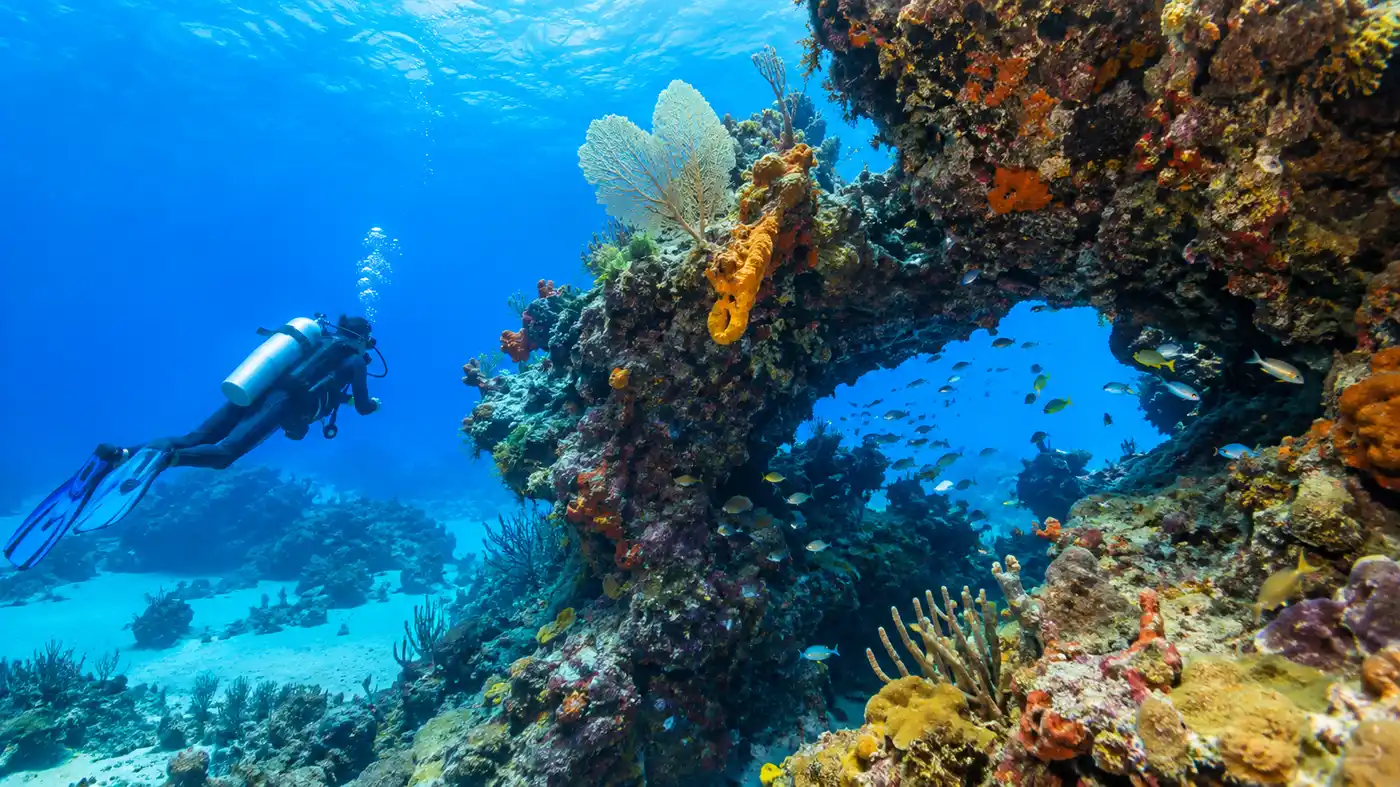
The coral formations themselves are the real draw. Over millennia, star coral, brain coral, and giant sheet coral have grown outward and upward, creating hollow caverns, sweeping tunnels, and spiraling overhangs. Sunbeams slice through skylights in the coral ceiling, illuminating schools of glassy sweepers and blue chromis suspended in the shadows. It feels architectural, almost like drifting through a submerged gothic basilica.
| Dive Site | Depth Range | Typical Current | Key Highlights | Experience Level |
|---|---|---|---|---|
| Palancar Gardens | 35 - 75 ft (10 - 23 m) | Mild to moderate | Gentle swim-throughs, lush sponges, turtle cleaning stations | Beginner to Advanced |
| Palancar Horseshoe | 50 - 90 ft (15 - 27 m) | Moderate | Natural U-shaped amphitheater, towering coral heads | Intermediate |
| Palancar Caves | 60 - 100 ft (18 - 30 m) | Moderate to swift | Deep interconnected tunnels, vertical drop-offs, abyss views | Intermediate to Advanced |
| Palancar Bricks | 50 - 110 ft (15 - 34 m) | Moderate to strong | Giant coral pillars resembling brick towers, deep wall drift | Advanced |
Depth Profiles and Cozumel Wall Diving Realities
Every morning boat trip south treats divers to classic Cozumel wall diving, but Palancar requires respect because the bottom under you is simply not there. At Palancar Caves or Palancar Bricks, you might start your descent over a coral pinnacle at 55 feet. Within three fin kicks, you drift over the lip of the drop-off where the wall falls away into deep indigo nothingness. If you drop a flashlight or a camera here, you can kiss it goodbye. It is gone forever.
Because the water is absurdly clear, depth perception plays tricks on your senses. Divers regularly feel like they are cruising along at 45 feet when their dive computer is actually screaming 83 feet. Nitrogen narcosis can creep up quietly in these warm, blue depths. You find yourself gazing down into the blue, mesmerized by a passing eagle ray, totally oblivious to your descent rate. Good buoyancy control is not optional here. You must be able to level off instinctively using your breath, hovering effortlessly above delicate gorgonians without scraping your knees on the coral.
Note: The Cozumel marine park strictly bans dive gloves and knives. Do not bring them on the boat, as park rangers conduct random spot-checks at Marina Fonatur and Marina Caleta, and you will be forced to leave them behind or face a fine for your dive operator.
Swim-throughs at Palancar Caves deserve special mention. These are true overhead environments, though most are short and feature visible blue exits. You slip into a shadowy trench at 75 feet, turn a corner around a giant pillar of mountainous star coral, and pop out into the open void at 90 feet. Silt can be kicked up quickly by poor fin technique. Divers should use modified flutter or frog kicks to avoid blinding the people swimming behind them. If you get claustrophobic in enclosed spaces, tell your guide beforehand. You can easily float over the tops of the caverns and enjoy the view without ever going inside.
Planning 2 Tank Dive Expeditions in Palancar Reef
The standard operating rhythm on Cozumel revolves around morning departures. Taking part in regular 2 tank dive expiditions in palancar reef means an early start, typically meeting your crew at the dock between 7:30 and 8:15 AM. The boat ride from San Miguel downtown takes 40 to 50 minutes, though boats leaving from Marina Fonatur or Marina Caleta cut that transit time down to about 25 minutes. That morning run down the coast is peaceful, watching the jungle shoreline slide past while you double-check your O-rings and analyze your nitrox blend.
A standard two-tank profile pairs Palancar with a shallower site further north. Your first dive will almost always be the deep profile at Palancar Caves, Horseshoe, or Bricks. You drop down to around 80 or 90 feet for the first 20 minutes, gradually stair-stepping your way up along the reef crest to 50 feet as your non-decompression limit ticks down. After a full safety stop hanging in blue water while your boat captain tracks your bubbles, you climb aboard for an hour-long surface interval spent snacking on pineapple slices and sweet Mexican cookies.
- Tank configurations: Most operators provide standard aluminum 80s filled to 3,000 PSI, but high-volume divers can request 100 cubic-foot steel tanks for a surcharge of roughly $12 per morning.
- Gas mixtures: Enriched air Nitrox (usually 32%) is widely available and strongly recommended; it buys you critical extra bottom time along the 70-foot ridges of Palancar.
- Surface marker buoys: Every buddy pair should carry at least one bright orange DSMB on a reel, because surfacing away from the group in open water is common when currents shift.
- Surface intervals: Reputable shops use this time to motor slowly north toward shallower reefs like Paso del Cedral, Yucab, or Tormentos for the second dive.
The second dive of the day takes place in the 40 to 60-foot range. This allows you to off-gas safely while still watching nurse sharks snoozing under ledges and schools of French grunts milling around patch reefs. By 1:30 PM, you are usually back on dry land, leaving your afternoon wide open for street tacos, gear rinsing, or an overdue nap.
Book your palancar reef experience:
Picking the Best Scuba Diving Companies in Palancar Reef for Beginners
If you are newly certified or have fewer than 25 logged dives, diving palancar reef cozumel can feel intimidating. The combination of drift currents, deep drop-offs, and live boat pickups requires solid instruction. The island has over 120 registered dive shops, ranging from massive operations running 40-diver catamarans to boutique outfits using fast, six-passenger pangas. Big boats offer stable rides and on-board heads, but they dump giant pods of divers into the water simultaneously, which ruins the sense of solitude.
For newer divers, smaller shops providing "valet" service are worth every extra dollar. These teams carry your heavy gear, set up your first stage, swap your tanks between dives, and pair you with an experienced divemaster who keeps groups capped at four or five divers. A small group allows the guide to watch your air consumption closely, help adjust your trim weights, and signal when it is time to rise above a swim-through instead of following the pack into a tight space.
Pro tip: If you get seasick easily, choose an operator based out of Marina Caleta or the southern hotel piers. Skipping the 45-minute chop crossing from the northern marina makes a massive difference in how your stomach feels before your backroll.
When searching for the best scuba diving companies in palancar reef for beginners, look past flashy Instagram photos and ask direct logistical questions. Ask specifically what their maximum guide-to-diver ratio is. Find out if they let everyone dive their own computer profile, or if they pull the entire group up to the surface the moment the biggest air-hog hits 700 PSI. The better operators will group divers by experience level so seasoned divers aren't stuck at 35 feet, and nervous novices aren't dragged down into a 90-foot drift they aren't ready to handle.
Marine Encounters and Conservation Reality
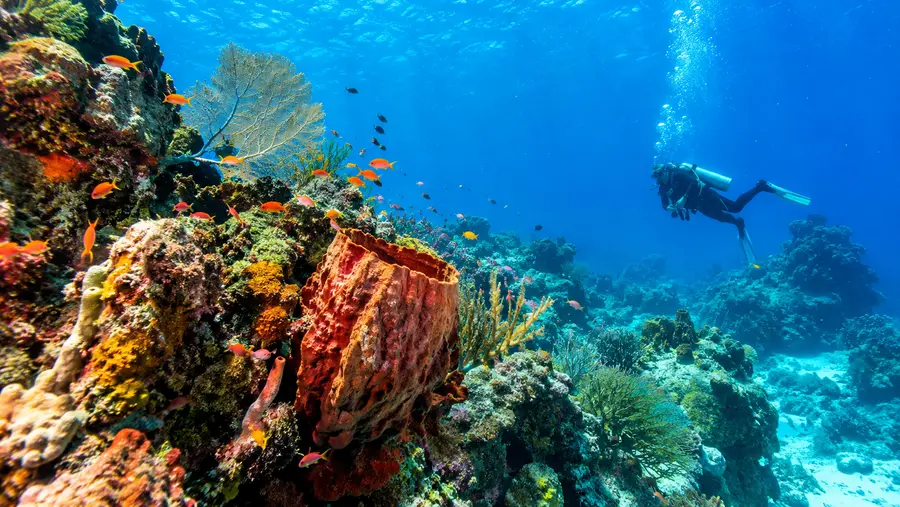
While the geological structures get all the press, the wildlife along Palancar is extraordinary. Because the area has been protected under federal law for decades, the animals here show remarkably little fear of divers. Check out our comprehensive Palancar Reef marine life guide for deep dives into specific species, but expect regular run-ins with hawksbill sea turtles lazily grazing on sponges, green moray eels swimming freely along the bottom, and large black groupers shadowing your fins.
Nurse sharks are common resting on the sandy floors of the caverns. You might peer into a dark undercut at 65 feet and spot two or three of them tucked side by side, their gills rhythmically pulsing as they rest. Look closely into the rubble underneath coral heads for the endemic splendid toadfish, a creature found nowhere else on earth outside the waters surrounding Cozumel. With vibrant yellow fins, patterned purple-black stripes, and whisker-like barbels around its mouth, it looks like something out of a science fiction sketch.
- Keep your distance: Federal park rules mandate staying at least five feet away from all marine life; touching a turtle or nurse shark can result in your operator being stripped of their marine park permit.
- Sunscreen rules: Only mineral-based zinc or titanium sunscreens are technically allowed, but honestly, the best approach is skipping lotion entirely until you get back to dock and wearing a hooded rashguard on the boat.
- Buoyancy discipline: Keep your gauges tucked into your BCD pockets; dangling consoles drag through delicate brain coral and break off decades of slow calcification in half a second.
Water temperatures hover between 78°F in February and 84°F in August. A 3mm shorty or full wetsuit is plenty for most divers during the winter, while a simple 1mm skin or rashguard works nicely throughout summer. Keep in mind that doing multiple 50-minute dives back-to-back will leach body heat even in tropical water, so if you run cold, pack a thin neoprene vest to layer underneath.
Frequently Asked Questions about palancar reef diving
Can open water beginners dive at Palancar Reef?
Yes. Sites like Palancar Gardens have broad, shallow plateaus between 35 and 50 feet that feature mild currents and minimal obstacles. Beginners should simply avoid deep profiles at Palancar Caves or Bricks until they have mastered neutral buoyancy.
How strong is the current on Palancar Reef?
Currents generally range between 1 and 2 knots. It is rarely violent, but you cannot swim against it. Divers must get comfortable relaxing into the flow and letting the boat follow their surface marker buoy overhead.
Do I need an advanced certification to dive the caves and tunnels?
Most reputable operators require either an Advanced Open Water certification or proof of at least 20 logged drift/deep dives before taking you through the deeper swim-throughs at Palancar Caves, which regularly exceed 75 feet in depth.
Quick Reference
- Average visibility: 80 to 120+ feet
- Water temperature: 78°F to 84°F year-round
- Standard profile: 2-tank morning drift dive
- Marine park fee: ~$6 USD per diver per day
- Primary access: 25-45 minute boat ride south
Book your palancar reef experience:
The Bottom Line
Palancar Reef lives up to its reputation for a reason. Drifting alongside a multi-story wall of living coral while sunlight filters through massive underwater arches is something you will remember long after your dive logbook gets waterlogged and frayed. Pick an operator with small groups, watch your depth gauges, relax your breathing, and let the Cozumel current do all the work.
Read more about palancar reef.