Palancar Gardens & Horseshoe: Cozumel Dive Site Overview
The boat engine cuts out about four miles south of the international pier, and suddenly everything goes quiet except for the slap of turquoise water against the fiberglass hull. Looking down through thirty feet of water so clear it makes you dizzy, you can already make out the towering coral ridges of palancar gardens. It is one of those dive sites people talk about with a dreamy look in their eyes. Most divers who come to Cozumel end up here on their very first morning, and there is a very good reason why divemasters treat it as the gold standard of the island.
Palancar is not just a single spot on a nautical chart. It is an enormous reef system stretching over three miles along the southwest coast, divided into distinct sections like Caves, Bricks, Gardens, and Horseshoe. If you want cavernous swim-throughs that open into deep blue abyss, you go to Horseshoe. If you want sweeping valleys of brain coral, massive sea plumes, and a relaxed current that lets you hover without burning through your air tank, you drop into Gardens. Together, they represent the absolute best of drift diving in the Mexican Caribbean, whether you have twenty logged dives or two thousand.
Book your palancar reef experience:
Understanding Palancar Gardens and its Gentle Drift
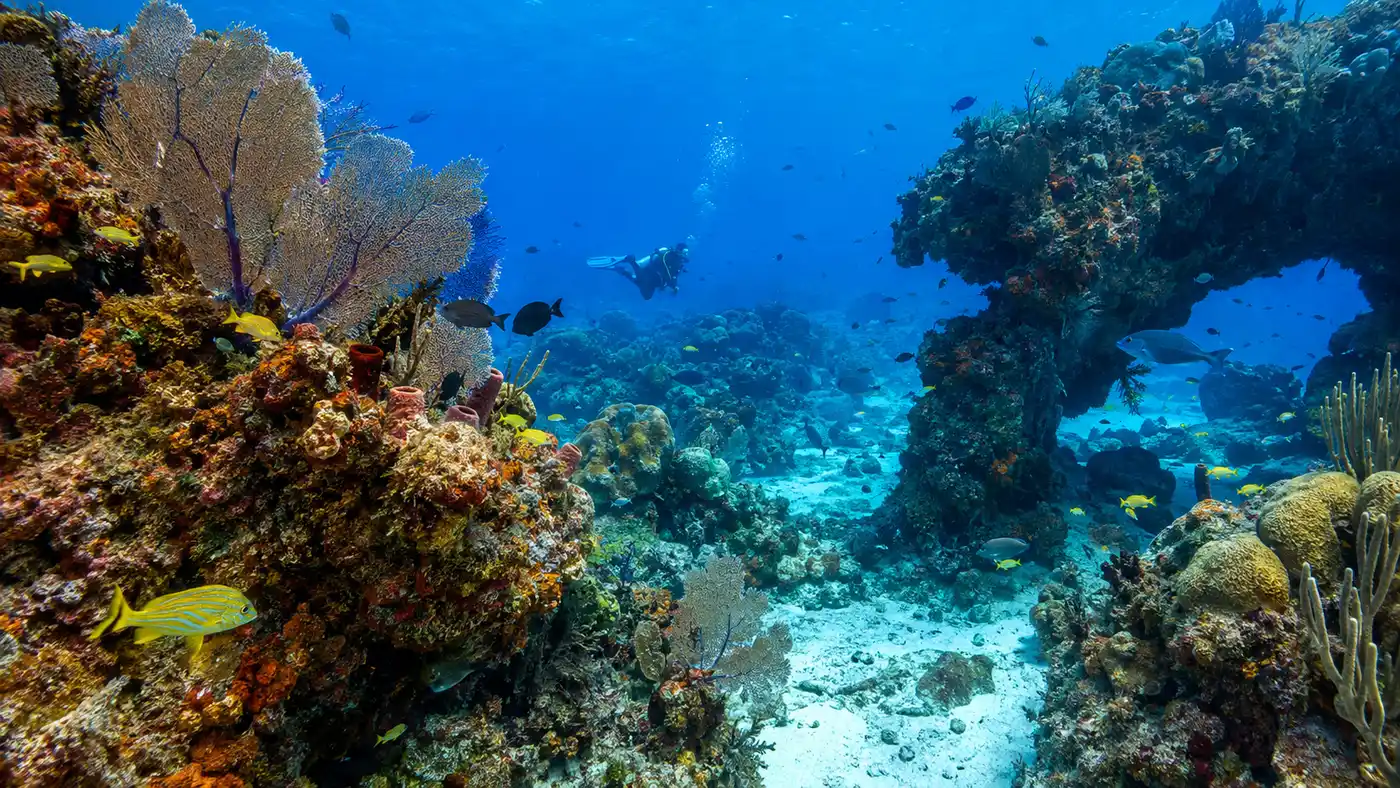
The drop at Gardens begins along an extended sloping terrace. Most boats drop you right near the northern boundary, where the reef crest sits around 35 feet deep before gently stair-stepping down toward 80 feet. You step off the boat into a gentle, north-flowing current. It carries you along with almost zero effort on your part, like walking onto an underwater moving sidewalk. I still remember my third dive here years ago when I accidentally left my camera mount loose; the current just floated it alongside my shoulder like an obedient pet.
What sets this area apart from the deeper southern sections is the sheer volume of sunlight reaching the ocean floor. At 45 feet, the colors do not wash out into dull blues and grays the way they do at depth. The orange elephant ear sponges actually look neon orange. Giant yellow tube sponges sprout four feet out of coral heads, vibrating slightly in the water movement. Schools of blue tangs move across the coral flats in synchronized packs, their electric bodies flashing against the limestone backdrop.
Pro tip: Tell your guide you want to stay along the inner sand channels at 45 feet for the first half of the dive; you will burn half as much gas and see twice as many juvenile critters hiding under the ledges.
Because the current here is generally moderate - usually around 1 to 1.5 knots - it serves as an ideal warm-up site. You do not need to kick aggressively. In fact, if you kick constantly, your dive guide will probably turn around and give you the flat-hand sign to calm down. You simply trim out your buoyancy, cross your arms over your chest, and steer with micro-adjustments of your fin tips. The reef runs parallel to the coast, with tall finger formations reaching toward the surface and sandy channels cutting between them like cobblestone alleys in an old village.
You will often find yourself crossing over into the shallow palancar reef flats toward the end of your tank. As you ascend into 25 or 30 feet of water for your safety stop, the sand beneath turns blazing white. Rays of sunlight dance across the bottom, and you can look down to watch southern stingrays digging for buried mollusks in the sand, kicking up small clouds of sediment that drift away behind them.
Diving Horseshoe Reef: The Natural Coral Amphitheater
Move just slightly south along the reef wall and the architecture changes completely. Horseshoe reef gets its name from a massive U-shaped opening carved directly into the high coral wall. It sits like an ancient Roman amphitheater submerged in eighty feet of ocean. Coming out of a narrow passage into the center of this curved arena is disorienting in the best way possible.
The outer edges of the horseshoe tower forty to fifty feet above the sandy floor of the basin. The walls are perforated with tunnels, dark cracks, and winding swim-throughs carpeted with lace coral and delicate hydroids. You tuck your arms in, flutter your fins gently, and glide into a shadowed crack in the reef, only to emerge ten seconds later over a stunning blue precipice. It makes you feel like an astronaut exploring submerged mountain peaks.
Note: Horseshoe requires solid buoyancy control because several of the tunnel exits open straight onto sheer drop-offs where the sand bottom is more than a hundred feet below you.
Light filters through the overhead fissures in Horseshoe in dramatic sunbeams. On a clear day around eleven in the morning, the light rays look like cathedral windows piercing the gloom. Glassy sweepers and copper sweepers fill these interior caverns by the thousands, shifting in unison whenever a diver passes through. It is easy to see why photographers get obsessed with this spot. You can spend an entire dive exploring just two or three large coral buttresses without ever feeling like you rushed through the scenery.
Outside the curved amphitheater wall, the terrain breaks into colossal pinnacles. Some of these coral monoliths rise up from 90 feet, stopping just short of the surface. Between the pillars, deep ravines drop away toward the deep. The water in the ravines feels cooler, sometimes carrying a slight thermocline that blurs your vision for a second or two until you float through it. It is raw, dramatic, and completely different from the peaceful garden pastures just a short boat ride north.
Depth Profiles, Currents, and the Palancar Reef Drop Off
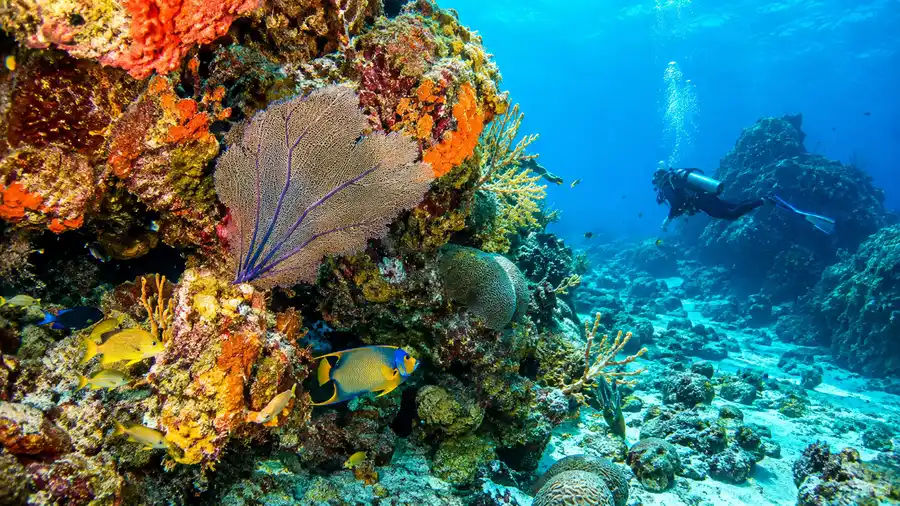
Planning your gas consumption requires paying close attention to where your guide takes you along the palancar reef drop off. While the reef top starts around 30 to 40 feet, the seaward wall tumbles into the abyss. Out past the outer ridges, the bottom drops away into the blue channel between Cozumel and the Yucatan mainland, reaching depths over 1,500 feet. Staring over that lip gives you an unmistakable flutter in your stomach.
The beauty of this geography is that you can dive it at almost any depth you want. If you are diving with someone who gets nervous below 50 feet, you can stay on top of the coral plateau the entire time and have a magnificent experience. If you hold an advanced certification and want to explore the deeper crevices, you can trace the 80-foot contour line, ducking under arches and peering down into the deep blue shadows where larger pelagics cruise. To learn more about navigating these deeper walls, check out our comprehensive Palancar Reef scuba diving guide for depth profiles across the entire marine park.
| Dive Site | Average Depth | Max Rec Depth | Current Level | Best Suited For |
|---|---|---|---|---|
| Palancar Gardens | 40 - 55 ft | 80 ft | Mild to Moderate (1 knot) | Beginners, Photographers, Long Dives |
| Palancar Horseshoe | 50 - 75 ft | 90 ft | Moderate (1 - 2 knots) | Intermediate, Swim-Through Fans |
| Palancar Caves | 60 - 80 ft | 100 ft | Moderate to Strong | Advanced Buoyancy, Cavern Explorers |
| Palancar Shallows | 15 - 30 ft | 35 ft | Very Mild | Snorkelers, Student Open Water Checkouts |
Currents along the drop-off can play tricks on your depth gauge. Occasionally, an upwelling hits the face of the coral wall, pushing cold, nutrient-rich water upward and giving you extra lift. Other times, especially around the outer points of Horseshoe, you might feel a gentle downcurrent tugging at your fins. It is rarely violent here, but you do need to keep an eye on your computer. It is surprisingly easy to drop an extra twenty feet while staring at an eagle ray without realizing you are sinking.
Book your palancar reef experience:
Marine Life Encounters Around Palancar Gardens Reef Cozumel
The biodiversity around palancar gardens reef cozumel is staggering. Because the entire southern area is part of the Arrecifes de Cozumel National Marine Park, commercial fishing has been outlawed for decades. The animals know they are safe. You will see hawksbill turtles crunching aggressively on sponges, completely indifferent to divers floating three feet away. They just keep chewing, blinking their heavy eyelids against the current.
Green moray eels are common residents here. They live inside the coral undercut ledges, their thick, muscular bodies coiled up like green firehoses. You will usually spot them with their heads poking out into the open water, opening and closing their toothy mouths to breathe. It looks menacing, but they are just pumping water over their gills. Nurse sharks also love the sandy overhangs at the base of the Gardens' coral heads, where they sleep during the day tucked away from the main surge. For a complete breakdown of the species you might run into, browse our Palancar Reef marine life guide before your boat departs.
Look into the small cracks rather than just staring at the big structures. If you carry a small dive light, you will discover an entirely hidden world:
- Splendid toadfish: unique to Cozumel, these reclusive bottom-dwellers hide deep in limestone burrows with only their bright yellow-bordered fins and patterned heads visible.
- Spiny lobsters: massive specimens gather under wide coral ledges, their long white antennae poking out to gauge passing threats.
- Queen angelfish: brilliant iridescent blue and yellow bodies darting between sea fans, often swimming in bonded pairs.
- Spotted drum: juveniles with ribbon-like dorsal fins that dance in looping circles inside dark cavern overhangs.
- Scrawled filefish: masters of disguise that drift vertically next to sea rods, shifting their turquoise skin patterns to blend in.
Out in the blue, keep one eye away from the reef. Spotted eagle rays are frequent visitors between November and March. They fly past in loose formations of three to six animals, their long tails trailing behind them as their wingtips ripple with effortless power. You hear them before you see them sometimes - or rather, you hear your divemaster furiously banging a tank banger against an aluminum cylinder to get everyone to turn their heads.
Planning Your Boat Days and Gear Setup
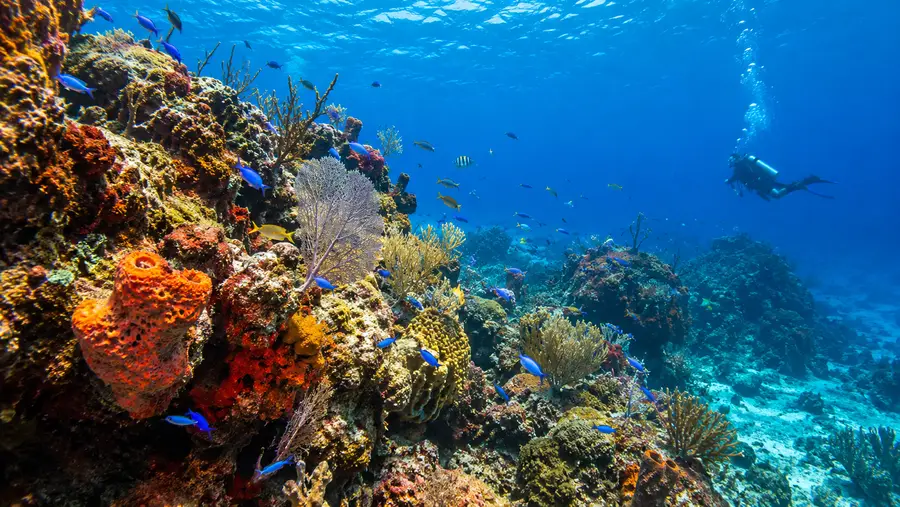
Getting out to Palancar takes a bit of time compared to northern reefs like Villa Blanca or Paradise. Most dive operations leave from the marina in San Miguel or the Caleta harbor south of town. On a standard twin-engine panga, expect the boat ride to take between 35 and 45 minutes to reach the southern end of the park. The water is usually calm in the morning, but the ride back can get bumpy when the afternoon trade winds pick up from the east.
Most operators run Palancar as the first dive of a two-tank morning trip. You hit the deeper site first - usually Horseshoe, Caves, or the deeper rim of Gardens - complete a one-hour surface interval floating off the coast of Playa Palancar, and then do your second dive on a shallower patch reef like Dalila or Paso del Cedral. That surface interval is half the fun, eating fresh pineapple and jicama slices on the boat deck while warming your skin in the sun.
Here are a few practical rules of thumb to make your excursion run smoother:
- Wetsuit choice: a 3mm shorty works well from May to October when water temperatures hover around 82 degrees, but bring a full 3mm or 5mm suit from December through March when bottom temps dip to 76 degrees.
- Surface marker buoy: carry your own brightly colored SMB and spool in your BCD pocket; if you get separated from your group in the drift, popping a buoy is essential for boat pickup.
- Camera tethering: clip every piece of camera gear securely to your chest with a coiled lanyard, because if you drop a strobe or lens cap down the drop-off, nobody is going down to fetch it.
- Ear equalization: start clearing your ears early and often on the descent; drift drops happen fast since the whole boat drops together and descends immediately as a group.
Honestly, you do not need ultra-specialized equipment here, just reliable, well-maintained basic gear. If you are prone to seasickness, take your favorite remedy before the boat leaves the dock. Even though Cozumel's leeward side is generally sheltered from Atlantic swells, sitting on a drifting boat while thirty other divers pull on their fins can scramble an empty stomach surprisingly fast.
Frequently Asked Questions about palancar gardens
Can beginners dive Palancar Gardens safely?
Yes, Palancar Gardens is considered one of the best sites in Cozumel for freshly certified Open Water divers. The current is usually predictable, the reef starts at comfortable shallow depths around 35 feet, and visibility commonly exceeds 100 feet, making navigation stress-free.
What is the difference between Palancar Gardens and Horseshoe?
Palancar Gardens features wide sand alleys, abundant macro life, colorful sponge gardens, and a very gentle depth profile. Horseshoe is much more dramatic, centered around a massive U-shaped coral amphitheater with narrow swim-throughs and steeper walls that drop into deep water.
Can you snorkel Palancar Gardens and Horseshoe?
Snorkelers can visit the shallow fringe areas of Palancar Reef where the coral reaches within 15 to 20 feet of the surface, but the main amphitheater at Horseshoe and the deep sections of Gardens are too deep for standard snorkeling. Most snorkel boats stop closer to the inner sand flats or El Cielo nearby.
Quick Reference
- Depths: 35 to 80 feet
- Visibility: 80 to 120+ feet
- Current: mild to moderate drift
- Boat ride: 40 minutes from San Miguel
- Marine life: hawksbill turtles, morays, nurse sharks
Book your palancar reef experience:
My Take on Palancar
Whenever someone asks me where they should dive on their first trip to Cozumel, my answer is always the same. Do not overthink the itinerary or stress about finding secret hidden spots off the tourist trail. Book a boat that heads straight south to Palancar on your first morning. There is something truly unforgettable about slipping backward over the gunwale, clearing your mask, and floating weightlessly over these gargantuan limestone towers for the first time. It ruins you for average diving elsewhere, but it is worth every single penny.
Read more about palancar reef.